


Mergers and acquisitions (M&A) are often celebrated as bold strategic moves, expanding markets, acquiring new capabilities, and unlocking synergies. Yet, the sobering reality is that over 90% of M&A deals fail to deliver their intended value. The reason? Not flawed financials or strategy, but the overlooked human dynamics: culture, leadership, and the way work truly gets done.
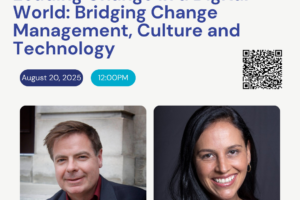
At Prompta AI, we believe that successful post-merger integration (PMI) isn’t about boxes on an org chart or a single “Day One” event. It’s about winning hearts and minds. In a recent webinar, I was joined by change strategist Trish Gregory and transformation leader Rob Allen from Aligned Outcomes to explore how organizations can de-risk integration and unlock business value by putting people first.
The Diamond Model: A Holistic View of Transformation
To set the stage, Trish shared the Diamond Model with four interdependent elements that inform the success of any M&A integration:
1. Organizational Structure – roles, accountabilities, and alignment.
2. Technology & Process – platforms, workflows, and ways of working.
3. Management Systems – metrics, governance, and decision-making.
4. Culture & Behavior – values, leadership style, and lived employee experience.
Too often, she explained, organizations focus heavily on technology and metrics while neglecting structure and culture. “Each organization comes with its own culture. There are strengths, there are weaknesses, and we help the merged organization bring out the best of both worlds… but every single employee is asking on Day One: ‘Where do I land?’” Ignoring that simple but profound question can derail integration before it begins.
Early Warning Signs: Sentiment as M&A Insurance
Trish described one of the earliest red flags: leadership disengagement. “We look at the senior leadership team and we watch for people who are disconnecting early. If they exit, what we then have is this whole group of people who don’t have a leader and they wonder, what does it mean for me?” This is where sentiment analysis becomes invaluable. By uncovering what employees fear, value, and hope for, leaders can spot resistance before it spreads. “If your people believe you want them to land well, they’ll trust you enough to wait and see,” Trish emphasized. At Prompta AI, we call this M&A insurance, protecting deal value by understanding the human side of change early.
Capturing “How Work Really Gets Done”
Numbers and strategy only tell part of the story. As Rob Allen stressed, integration often fails because leaders don’t understand the real workflows. “Often in post-integration you’re running off SOP documents or management perceptions. What we do is work with subject matter experts to map how the workflows actually happen. That way, you can rapidly design the future workflows and align technologies to the new model.” This participatory approach does more than improve efficiency, it turns employees into “enthusiastic target adopters.” Rob explained: “They feel like they’ve been heard, their expertise used, and they go back saying, ‘This project is going really well.’”
Trish added that the mix of optimists and critical thinkers involved in this process creates “a positive hum” across the organization, fueling momentum and buy-in.
Culture Clash or Culture Cure?
Culture is often seen as a liability in M&A, the dreaded “culture clash.” But sometimes, it’s the opposite: a cure.
Trish recalled a merger where the smaller acquired company had a culture of openness and innovation, while the larger acquirer was more hierarchical. “We were able to share with the leadership team, in addition to the book of business, you’re actually gaining organizational strengths that will enhance your culture.” By intentionally preserving and amplifying those strengths, the new entity created a culture that was stronger than either company alone.
Lessons from the Field
Rob shared a story of a mortgage renewal company whose turnaround times ballooned from seven days to 21 after a merger. Executives thought the answer was a $10M CRM system. Instead, Rob’s team discovered misaligned workflows. “In four weeks, we had the target state designed, and within 60 days turnaround was back to six days.” The lesson? Technology is an enabler, not a cure-all. You must first understand the work.
Redefining Success
Traditionally, integration success is judged by revenue growth or cost savings. But Rob urged leaders to expand their definition: “Have the courage to bring employee satisfaction into your post-merger results profile. Ultimately, happy employees mean happy customers.” Trish reinforced the point: “Moments of truth with clients are driven by employees. If the people interacting with them feel valued and happy, those clients will stay. It’s that simple.”
The Role of AI
Both speakers emphasized that AI is no longer optional. It accelerates integration by surfacing insights that leaders can act on quickly. As Trish put it: “AI can help you dig through the masses of information and really pull out the critical areas you need to focus on to manage the human side of change. The faster you know those things, the faster you can settle your folks down and make them feel like somebody cares about them.” At Prompta AI, we see AI not as a replacement for leadership, but as an enabler, empowering leaders with actionable, timely insight into sentiment, readiness, and adoption.
Final Thoughts
M&A integration is one of the most complex transformations leaders will face. But it doesn’t have to be chaotic. By combining sentiment analysis, workflow mapping, and courageous leadership, organizations can avoid the pitfalls that derail so many deals. As Trish reminded us: “Do not underestimate the power of engaging with your people from the very first day. Give your managers everything they need. Keep the managers a day ahead of the employees. But do not underestimate how important it is to have open dialogue with your teams throughout the process.” At Prompta AI, that’s what we help leaders do – win hearts, win minds, and in turn, win business value.
👉 Click here to watch the full webinar replay.


 EN
EN  ES
ES