
There is an irony in traditional change management that we do not talk about enough.
Change practitioners spend their careers telling organizations they need to change.
We challenge leaders who say:
“But this is how we have always done it.”
We encourage employees to let go of old processes. We ask teams to rethink how work gets done. We help organizations move away from 30-year-old systems, outdated workflows and practices that may once have worked perfectly well but no longer make sense.
And yet, when it comes to change management itself, we often do exactly the opposite.
We keep trying to do change the way we have always done change.
- We manually fill in the templates.
- We conduct the assessments.
- We create the stakeholder maps.
- We spend months developing detailed change strategies and plans.
- We establish a linear sequence of activities and milestones.
Then we try to execute the plan we created months earlier, despite the fact that the organization has already changed around it.
And now, as change and transformation intelligence platforms and new technology become available, I am seeing another version of the same problem.
People ask:
“Can the technology do everything I used to do manually?”
I think that is the wrong question.
Stop Trying to Digitize the Old Change Playbook
Imagine your organization is replacing a 30-year-old legacy system.
Would you ask whether the new platform can recreate every green-screen workflow exactly as it exists today?
Probably not. Actually, of course not.
The whole point of transformation is to rethink what is possible.
You would ask:
- What can we do now that we could not do before?
- What work no longer needs to happen?
- What decisions can be made faster?
- What information can we see that we could never see before?
- What complexity can we remove?
We should be asking exactly the same questions about change management.
The goal of a change and transformation intelligence platform should not be to take every spreadsheet, template, interview, assessment and manual process we have accumulated over the past several decades and put it online.
That would just be digitizing yesterday’s change management.
The opportunity is much bigger.
The Plan Cannot Be the Product
Traditional change management has often been built around the creation of a linear change strategy and plans.
Spend enough time understanding the organization and the transition up front.
Develop the strategy.
Build the stakeholder plan.
Create the communications plan.
Develop the training plan.
Establish the roadmap.
Execute.
There is nothing inherently wrong with planning.
The problem is believing the plan will remain right.
Transformation does not happen in a straight line.
Leadership decisions change.
Priorities move.
Teams react differently than expected.
New risks emerge.
Momentum develops in places nobody anticipated.
Managers interpret messages differently.
Some groups move quickly while others struggle.
What mattered three months ago may no longer matter today.
And yet organizations can spend enormous amounts of time maintaining and implementing plans that are already drifting away from reality.
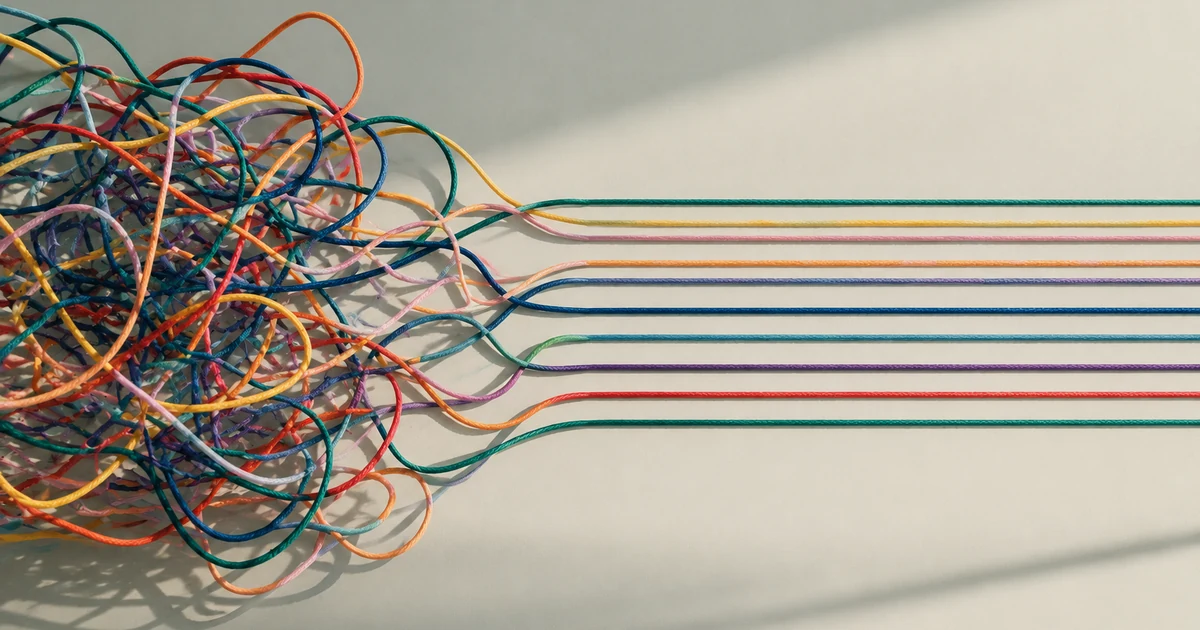
Change and transformation intelligence changes the equation.
Instead of asking whether we completed the activities in the plan, we can continuously ask whether the organization is actually moving.
Instead of relying primarily on assumptions made at the beginning of a transformation, we can use current organizational and workforce signals.
Instead of treating every stakeholder group the same, we can identify where specific friction, risk, engagement, adoption or readiness momentum exists.
And instead of waiting weeks or months to understand what is happening, leaders can act while it still matters.
That should fundamentally change how we work.
Not Every Old Activity Needs a New Technology Equivalent
This is the mindset shift I believe the change profession needs to make.
When technology eliminates work, we should let it eliminate the work.
We should not recreate manual activities simply because they were once part of the methodology.
If data can tell us where the greatest adoption risk exists, we do not need to spend weeks manually trying to infer it.
If organizational signals can show us that two functions are experiencing the transformation completely differently, we can target our actions accordingly.
If the intelligence tells us that managers are becoming a bottleneck, we can focus leadership attention there.
If something is working, we can understand why and build on it.
This is not about removing human intelligence from change.
It is about giving human intelligence better information to work with.
The judgment of experienced change practitioners still matters enormously.
- So does context.
- So does leadership.
- So does the ability to listen, interpret, challenge and act.
But those people should spend less time administering change management and more time managing change.
Transformation Requires Change Management to Transform Too
The organizations we support are being asked to rethink their operating models, their technology, their processes and increasingly the role AI and data will play in how work gets done.
The change profession cannot stand outside that transformation.
- We need to rethink our own assumptions.
- Move away from static plans toward living ones.
- Move away from broad activities and templates toward targeted intervention.
- Move away from periodic assessment toward ongoing intelligence.
Move away from measuring whether change management activities happened toward understanding whether change is actually happening.
And most importantly, stop asking whether new technology can reproduce everything we used to do.
- Some of those things should disappear.
- Some should become automated.
- Some should happen continuously rather than periodically.
- And some should be replaced by entirely different ways of understanding and acting on change.
For years, change practitioners have challenged organizations to stop saying:
“But this is how we have always done it.”
Maybe it is time we took our own advice.
The future of change management is not a faster version of the old playbook.
It is a different way of managing transformation altogether.
Still running the traditional change playbook?
Let’s talk about what Change and Transformation Intelligence could look like in your transformation.