

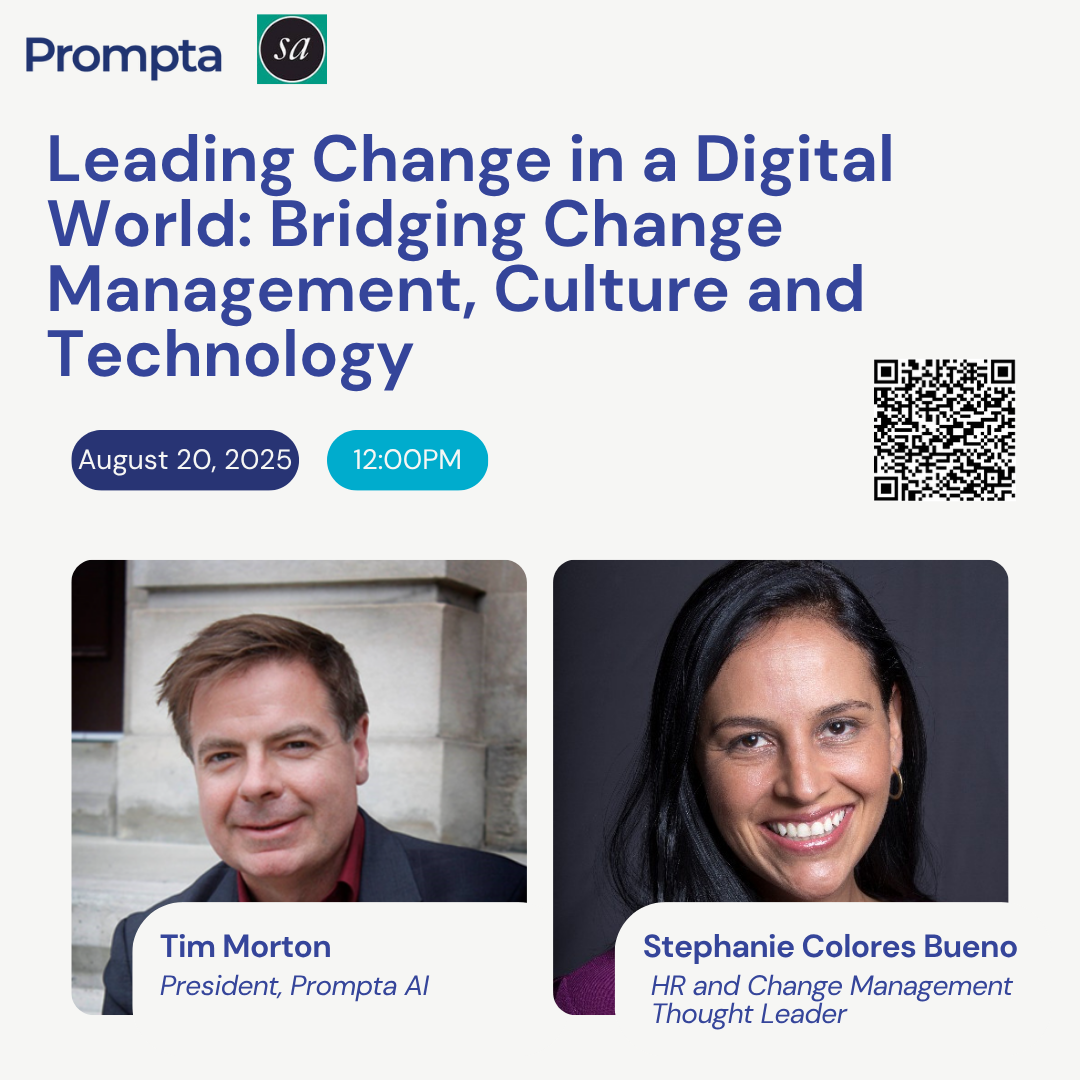
What does it actually take to lead meaningful change in today’s complex, AI tech-enabled world?
In a recent webinar “Leading Change in a Digital World: Bridging Change Management, Culture and Technology,” hosted by Tim Morton of Prompta AI with special guest Stephanie Colores Bueno a global HR leader and change management digital transformation expert, the insightful discussion focused on how successful digital transformation hinges on human connection, culture, and intentional leadership – not just shiny new tools. The conversation was clear: the real challenge in digital transformation isn’t the tech – it’s the people.
As Tim put it early in the conversation, “Digital transformation is not just about the technology, it’s about rethinking workflows, business models, and culture.” And according to Stephanie, organizations often get this backwards. “Sometimes we forget that technology doesn’t really just make the transformation in the organization. It’s those who use the technology and enable that technology that really bring those things to life.”
Tech Is Not the Strategy
Too often, organizations focus on implementing “perfect” AI and digital technology solutions without addressing how they’ll actually land with the people meant to use them. “We’ve seen organizations deliver on time, on budget, on scope, yet still wonder why people aren’t happy, or why the solution isn’t being adopted,” Tim said. Stephanie echoed this, warning that technology must be framed as an enabler, not an end in itself. “We focus so much on the product or process that we forget to ask how employees or customers will experience it.”
Her advice? Leaders must tie strategy, technology, and culture together from the beginning and include users in the journey. “It’s about making sure employees know the ‘why’ behind the change and are part of shaping how it’s implemented.”
Culture Is the Glue
Stephanie stressed that culture can’t be an afterthought. It needs to be built into every phase of the transformation, from strategy definition to change management to post-implementation. “Even at home, there’s a culture and we have to adjust it with technology,” she said with a smile. “Organizational culture must embrace feedback, learning, and iteration.”
Tim reinforced that point: “If it’s for us, it has to be with us. Change can’t be something done to people but instead it has to be done with them.”
One way to do that? Use stories. “Storytelling helps people understand what’s coming, how others navigated it, and that they’re not alone,” Stephanie said. She emphasized the importance of showcasing early adopters and rewarding those who model the desired behavior. “That’s how you reinforce the culture and show that change is possible.”
AI, Fear, and Reframing the Narrative
When the conversation turned to AI, Stephanie didn’t sugarcoat it: “AI is coming faster than we thought. But the initial messaging that it was going to replace humans created fear, and fear creates rejection.”
Her call to action was clear: “We need to reposition how we’re framing AI. It’s not about replacement. It’s about simplification. It’s about giving people time back, reducing manual work, and allowing them to focus on higher-value contributions.”
Tim added that Prompta AI was built with this philosophy in mind: to serve as a “digital listening engine” that surfaces sentiment, engagement, and resistance early, giving leaders timely insights to adjust and pivot.
Strategy Is a Journey, Not a PowerPoint
One of the most practical takeaways came when Stephanie walked through the journey of change. “You have to involve employees from the start, keep testing ideas, gathering feedback, and adjusting based on that input.”
And once a solution goes live? That’s not the end, it’s the middle. “Implementation isn’t success. You need checkpoints months later. Are people really using it? Is it improving outcomes? That’s when you know if the change has landed.”
Personas, Not Just ‘Employees’
Stephanie shared a lesson learned from the field: don’t treat employees as one big group. “Not everyone has the same needs. Managers, new hires, experienced staff, they’ll all experience change differently. You need to design your training and support based on those different personas.”
By segmenting support, organizations can better anticipate friction points and tailor messaging, training, and tools to each group’s needs.
Final Takeaways
Tim wrapped the discussion with a reminder: “Psychological safety, trust, and empathy, those are what allow people to engage in change.” And Stephanie’s final message was this:
“Culture must be part of your strategy from the beginning. Define it. Build it into the change journey. And never forget that each individual will experience change differently. The human element is not optional, it’s everything.”


 ES
ES  EN
EN